
The Business Systems Dashboard: Run Every Part of Your Business Predictably
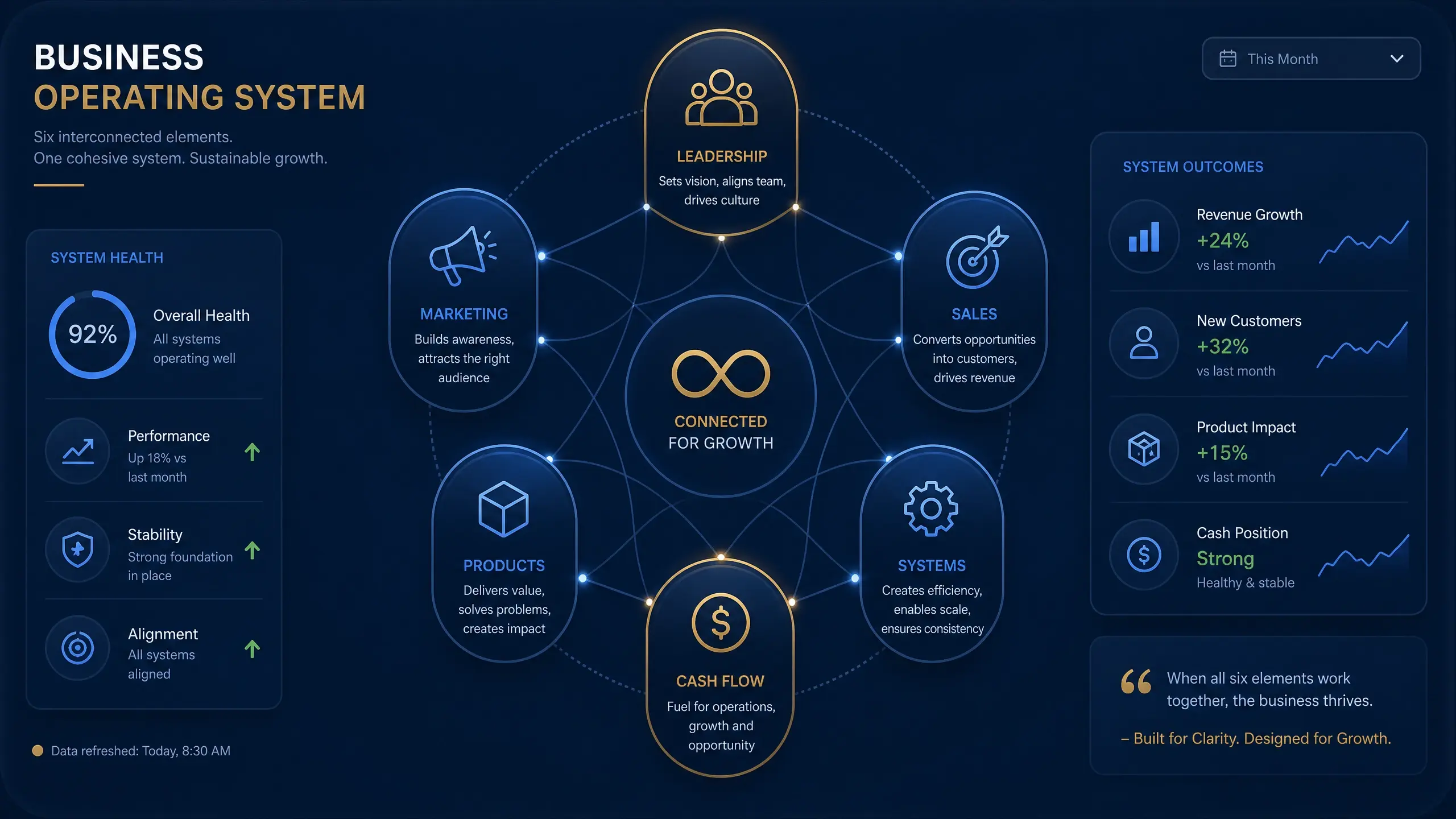
The Business Systems Dashboard is a diagnostic tool that asks business owners to measure 5 areas weekly: Lead Generation (are we attracting the right customers?), Fulfillment (are we delivering what we promise?), People (is our team growing and executing?), Money (is the business profitable and liquid?), and Customers (are they happy and coming back?). Most SMEs in Egypt and the Gulf only track money — and discover problems far too late.
Most SME owners run their business from a feeling: this month feels good, that month feels bad. They can't explain why revenue went up or down. They discover problems when it's too late to fix them.
The Business Systems Dashboard brings clarity. Instead of guessing, you measure. Instead of reacting, you notice trends and intervene early. The goal is not perfection — it's awareness. A business owner who knows exactly what's happening in their business can fix small problems before they become big ones.
What Is the Business Systems Dashboard?
Five interconnected dashboards that measure the health of every part of your business:
Leads Dashboard: New leads per week, lead source, conversion rate. Fulfillment Dashboard: Projects completed on time, customer satisfaction score, repeat business rate. People Dashboard: Team utilization rate, open roles, training completion. Money Dashboard: Revenue, gross margin, net profit, cash balance. Customers Dashboard: Net Promoter Score, repeat purchase rate, referral rate.
Why Does This Work for Small Businesses?
Because it identifies the highest-leverage problem to fix. Most owners guess — and usually fix the wrong thing. The dashboard shows exactly where the business is underperforming.
For businesses in Egypt and the Gulf, where informal management is the norm, this dashboard is especially powerful because it brings structure to what feels like chaos. Weekly measurement creates a feedback loop that drives continuous improvement.
How to Build Your Business Dashboard (5 Areas)
The five dashboards every SME owner needs:
- Leads: Track where every new lead comes from, how many convert to customers, and the average deal size. The most important number: are you attracting the RIGHT customers, not just any customers?
- Fulfillment: Measure on-time delivery, quality score, and customer feedback. If you're not delivering what you promise, your marketing doesn't matter — customers won't come back.
- People: Track team utilization, morale, and retention. A business that can't keep good people will never scale. Measure hiring speed, training completion, and 90-day retention for new hires.
- Money: Track revenue, gross margin, and net profit weekly. Know your cash conversion cycle. Know your breakeven point. Many businesses discover they're unprofitable 6 months too late.
- Customers: Measure satisfaction, retention, and referral rate. Your existing customers are your cheapest source of new business. Track why they leave and why they refer you.
How Do I Build This in My Business?
Start with one dashboard: Money. Track revenue and profit weekly for 4 weeks. You need this foundation before anything else. Then add Leads. Then Fulfillment. Build one at a time.
Use simple tools: a spreadsheet works fine for businesses under 20 employees. As you scale, ERPNext provides dashboards that integrate all five areas automatically. The key is consistency — measure weekly, even if imperfectly.
Frequently Asked Questions
Do I need complex software to track all this?
No. A well-designed spreadsheet with 5 tabs can track all five dashboards for a business with up to 20 employees. As complexity grows, ERPNext provides integrated dashboards across all five areas. Start simple, upgrade when you need it.
How do I get my team to actually use the dashboard?
Keep it simple and review it in weekly team meetings. The goal is awareness, not bureaucracy. If your team sees the dashboard leading to better decisions (not more paperwork), adoption happens naturally.
What's the single most important dashboard for an SME in Egypt and the Gulf?
Money — specifically cash flow. Most SME failures in the Egyptian and Gulf market come from cash flow problems, not lack of customers. Know your cash position weekly and you can solve problems before they become crises.
Run Your Business, Don't Let It Run You
A business owner who knows their numbers makes better decisions, fixes problems earlier, and grows faster. The Business Systems Dashboard is not about control — it's about clarity. You can only improve what you measure. Start measuring.
Build Your First Business Dashboard Today
Book a free website audit and I'll help you identify the most critical operational gaps in your business — starting with the dashboard that will have the biggest impact.
Book Your Free Audit